Blues Hog
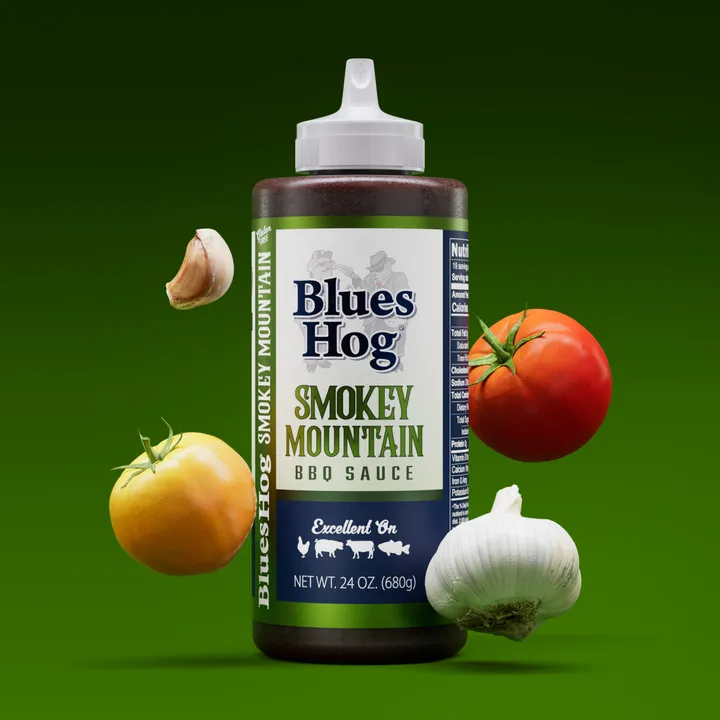
Smokey Mountain BBQ Sauce
4.5 (4)Smooth and rich hickory-smoked BBQ sauce blending the sweet thick base of Blues Hog Original with natural hickory smoke layers.
Heat 2/5
Sweet 4/5
Smoke 4/5
BUYING GUIDE
Hickory-named BBQ sauces in our database, ranked by web-consensus rating with the smoke source declared. The wood matters more than the marketing — and we'll show you why.
By BBQ Sauce Scout editors Updated 2026-05-31 How we test
Hickory is the default. Walk any American grocery aisle and the smoky-Original of every major brand is some flavor of hickory: Sweet Baby Ray’s Hickory Brown Sugar, KC Masterpiece Hickory, Head Country Hickory Smoke, Kinder’s Hickory Brown Sugar. The label says “hickory” — the actual smoke source might be hardwood smoldering in a barn somewhere, a barrel of distilled liquid smoke, or a generic “natural smoke flavor” extract that may or may not have started life as hickory at all.
The sauces below are the hickory-named bottles in our database, ranked by web-consensus rating. The detail page on each tells you which kind of smoke is in there.
A sauce makes this list when “hickory” appears in its bottle name or description — i.e., the brand is explicitly selling it as hickory — AND it clears our publication gate (verified or sourced ingredients, non-missing nutrition). We rank by Bayesian-shrunk web rating, so well-supported supermarket favorites like Sweet Baby Ray’s appear alongside craft pitmaster brands without an outlier with one review beating a sauce with hundreds.
The Smoke column on each sauce detail page is our 0-5 score for how much smoke you actually taste — which is sometimes different from how heavily the bottle markets itself. Some “Hickory Smoke” SKUs score a 5 because the smoke dominates; others score a 3 because sugar and tomato push it to the background. If you want unambiguous hickory presence, look at the smoke-5 entries first.
When a brand says “hickory” on the label, they could mean any of three things, ordered by cost and uniqueness:
Smoked over hickory — the sauce itself or a key ingredient (the tomato base, the vinegar, the salt) was exposed to actual hickory wood smoke during production. Rare, expensive, and worth the premium if you’re particular. Brands that do this advertise it loudly.
Natural hickory smoke flavor — distilled from real hickory wood smoke and added as a liquid concentrate. This is the workhorse of the category. Chemically indistinguishable from “real” smoke at typical use levels, much cheaper to produce. Most well-made hickory sauces use this.
Natural smoke flavor (no wood specified) — generic smoke concentrate that may be from hickory, may be from a blend, may be from a process that doesn’t care. The label is technically truthful but tells you nothing about the actual flavor profile. Common on bottom-shelf brands; not necessarily bad, but you can’t predict what you’re tasting.
The ingredient line on each sauce detail page tells you which of these you’re getting.
The most-sold variant in this category isn’t pure hickory — it’s hickory + brown sugar (or hickory + molasses). The brown sugar fills in the body and rounds the smoke’s harder edges; the combination is what most American eaters mean when they think “BBQ sauce.” Sweet Baby Ray’s Hickory Brown Sugar is the supermarket reference; Kinder’s Hickory Brown Sugar is the slightly-upmarket version.
If you want the smoke unaccompanied, look for “Hickory Smoke” or “Original Hickory” SKUs without the brown-sugar callout. Head Country’s Hickory Smoke and Stubb’s Original both lean cleaner-smoke / less-sweet.
Formulations change. Brands periodically swap “smoked over hickory” production for “natural hickory smoke flavor” when scaling, or vice versa. Confirm the ingredient line on the official product page before buying in volume.
Ranked by web popularity: the consensus rating across public reviews, adjusted for how many reviews back it.
Blues Hog
Smooth and rich hickory-smoked BBQ sauce blending the sweet thick base of Blues Hog Original with natural hickory smoke layers.
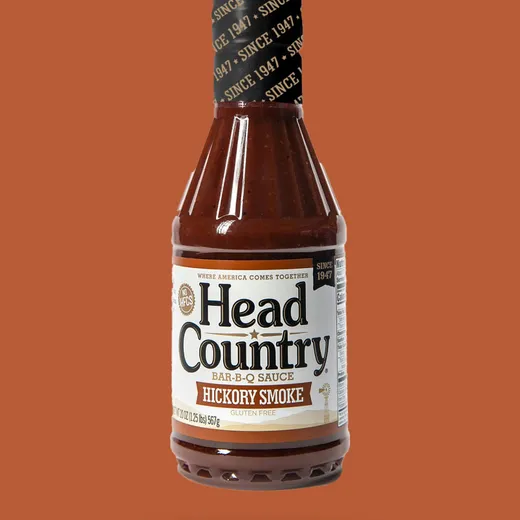
Head Country
4.3/5 across 5 sources — strong consensus.
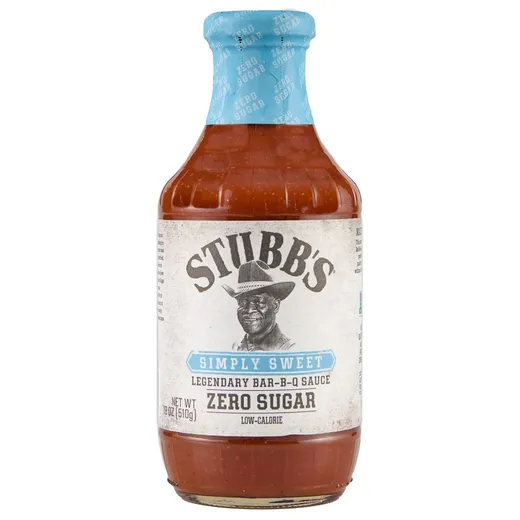
Stubb's
No sugar added BBQ sauce with tangy tomato, vinegar and hickory smoke flavor.
Stubb's
Sweet Texas-style barbecue sauce made with molasses and brown sugar for sticky sweetness, non-GMO and gluten-free with hickory smoke notes.
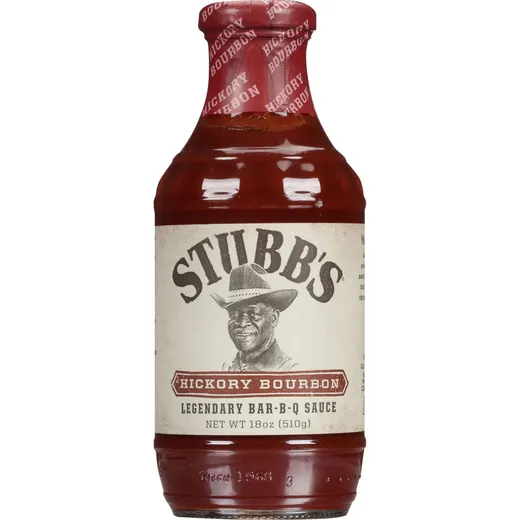
Stubb's
Thick & tangy Texas-style BBQ sauce with real bourbon and natural hickory smoke.
Stubb's
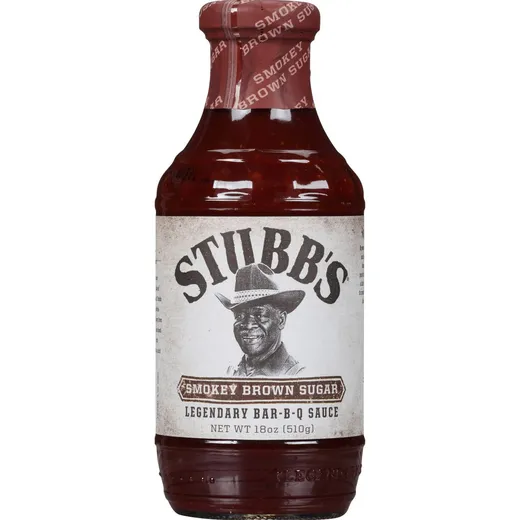
Brown sugar, molasses and natural hickory smoke flavor are blended with a hint of black pepper to create this sweet and smoky Texas-style BBQ sauce.
Sweet Baby Ray's
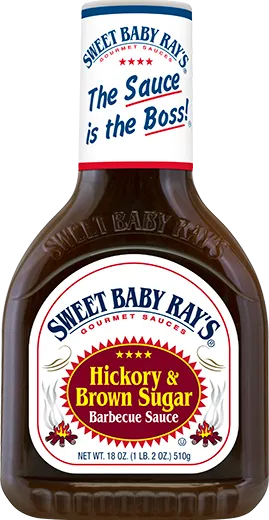
4.0/5 across 5 sources — strong consensus.
Kosmos Q
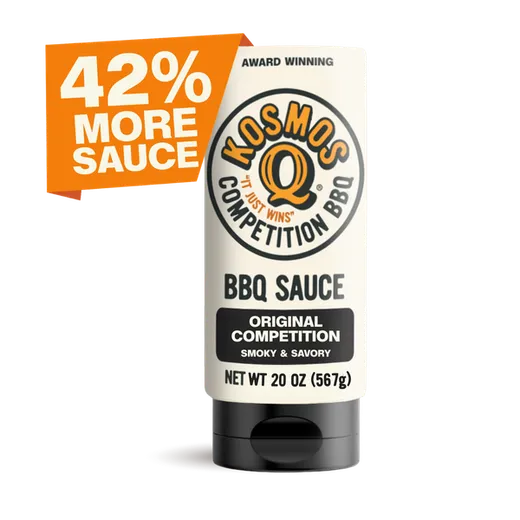
Sweet and smoky competition BBQ sauce with bold, salty-sweet Southern flavors and natural hickory smoke; award-winning and versatile on multiple meats.
Walden Farms
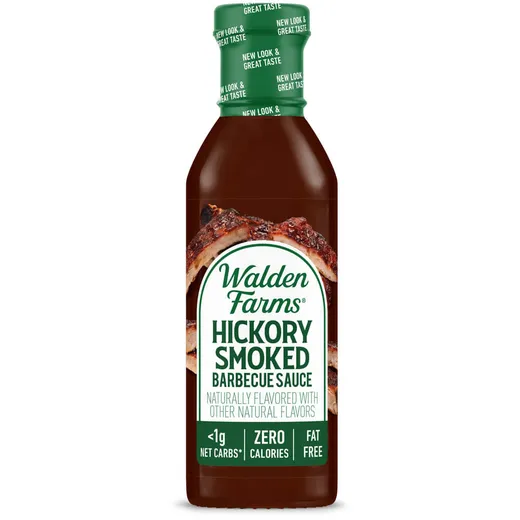
Zero calorie, sugar-free hickory smoked BBQ sauce made with apple cider vinegar and Dijon mustard, spiced with cayenne, garlic and rosemary.
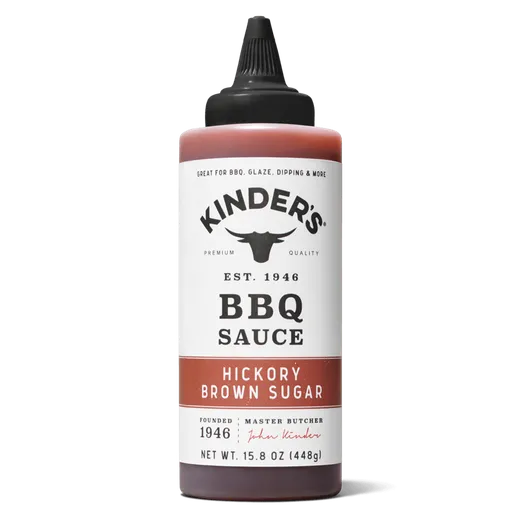
Kinder's
Sweet and smoky BBQ sauce made from high-quality tomatoes, brown sugar, molasses, spices and rich hickory smoke.
| # | Sauce | Style | Heat | Sweet | Sugars (g) |
|---|---|---|---|---|---|
| 1 | Smokey Mountain BBQ Sauce | kansas-city | 2/5 | 4/5 | 13 |
| 2 | Hickory Smoke Bar-B-Q Sauce | kansas-city | 2/5 | 4/5 | 0 |
| 3 | Stubb's Simply Sweet Reduced Sugar BBQ Sauce | texas | 2/5 | 3/5 | 5 |
| 4 | Stubb's Sticky Sweet Barbecue Sauce | texas | 1/5 | 5/5 | 11 |
| 5 | Stubb's Hickory Bourbon Barbecue Sauce | texas | 2/5 | 3/5 | 8 |
| 6 | Stubb's Smokey Brown Sugar BBQ Sauce | texas | 2/5 | 4/5 | 32 |
| 7 | Hickory & Brown Sugar | kansas-city | 1/5 | 4/5 | 16 |
| 8 | Kosmos Q Competition BBQ Sauce | kansas-city | 1/5 | 4/5 | 18 |
| 9 | Hickory Smoked BBQ Sauce | general | 2/5 | 1/5 | n/a |
| 10 | Hickory Brown Sugar BBQ Sauce | kansas-city | 1/5 | 4/5 | 13 |